Loops and Where Creativity Goes Next
Every new AI model upgrade seems to be accompanied by a general sense of amazement and unease. You get the inevitable flooding of social feeds with increasingly compelling “one-shots” that leave an unsettling pang of this incredible technology eating into what you do for a living, which - not to be too dramatic - feels like a significant part of our identity.
We’ve probably all asked ourselves some form of a question like “what do I do when AI can do everything I do?” Especially considering that there are fewer and fewer corners of what we do to retreat to when this technology becomes more and more capable, and doesn’t require 8+ hours of sleep every night, and isn’t as distracted by the snacks drawer… mmm.
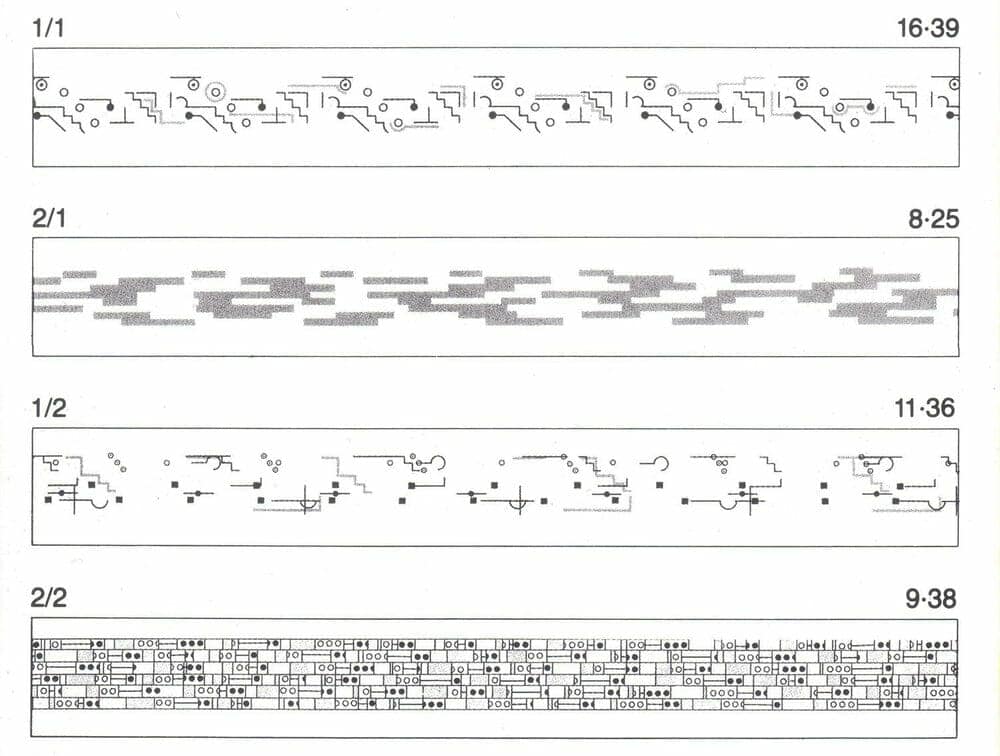
Anyway, it was a regular Wednesday when I loaded up my “1001 Albums You Must Hear Before You Die” daily challenge and it was one I had heard a few things about but never properly listened through - the definitive ambient music album: Brian Eno’s Music For Airports. It was a nice listen. Good background music for my usual rummage around Wikipedia to learn more about the album of the day. I was reading through the facts about how the album was made and I couldn’t help but notice that Eno, in 1978, made a move that I feel maps the direction and purpose of creative work in this current unmapped era of creativity.
I want to reassure you at this point, I’m not making some contrived historical reference to introduce the main idea like every business book ever written, this is actually useful and actually applicable. When making this album, Brian Eno’s studio would have looked like a network of tape loops. Long stretches of tape running between spindles at defined intervals. Each reel contained an idea - one loop might contain a single piano note, another might contain a vocal sustaining a note, and they would all repeat continuously along these different intervals due to how far the reel was stretched across the room. Eno recorded the results.
I just set all of these loops running and let them configure in whichever way they wanted to, and in fact the result is very, very nice. The interesting thing is that it doesn’t sound at all mechanical or mathematical as you would imagine. It sounds like some guy is sitting there playing the piano with quite intense feeling. The spacing and dynamics of “his” playing sound very well organized. That was an example of hardly interfering at all.
— Brian Eno on the making of Music for Airports
This became what was later labelled “generative music”. The systems and conditions that Eno put in place “made” the album. Rather than playing the individual instruments himself at the time of recording, the tape loops simply played and the music organised itself. Quite a remarkable process for its time, but what really grabbed my attention was how people reacted to the music. Eno spoke about this with Rick Rubin on the Broken Record podcast.
…people listen to (the music) and think, “oh, that’s nice. How did you do that?” When you tell them, they’re inevitably disappointed because they thought it was a moment of artistic inspiration. And I say “it was, it just happened somewhere else further back along the line.”
— Brian Eno on the Broken Record Podcast
The idea that the creativity “happened further back along the line” felt like a moment of clarity in amongst the ever-present sense of identity loss.
I started writing my thoughts about this a few weeks ago when I started to observe that the general running of a company is like a series of loops. Since then, loops have become a big talking point in the last week - the idea that people should build little systems that do the work and tweak them between runs rather than doing the manual coding and/or co-piloting.
How very Eno.
A quick warning though - I feel like “Loops” are just this week’s word/approximation of the broader move that goes way beyond small, repeatable processes into any act of creativity that AI appears to be chewing through as we speak.
Brian Eno made the move from instrumentalist → producer. It didn’t make him any less of a musician when he no longer played the notes, the instrument changed and so did his relationship with it. As a designer, my instruments for creative work are Figma, typefaces, imagery, and code. If I move into producer mode, the creativity happens further back along the line where I create the conditions, observe the output, tweak the conditions, and experiment.
I’ve used the word “creativity” a lot because I am speaking from my direct experience as a designer, but for me this extends to anyone who has created a company process, built a system, written code - it’s the same flavour of move from operator → producer. The creative decisions at that level are far more powerful than anything that you can do as an individual at the coalface. At least that’s how it feels to me: losing a walled garden, but gaining a kingdom.